Why Cramming the Night Before Actually Damages Your Exam Performance
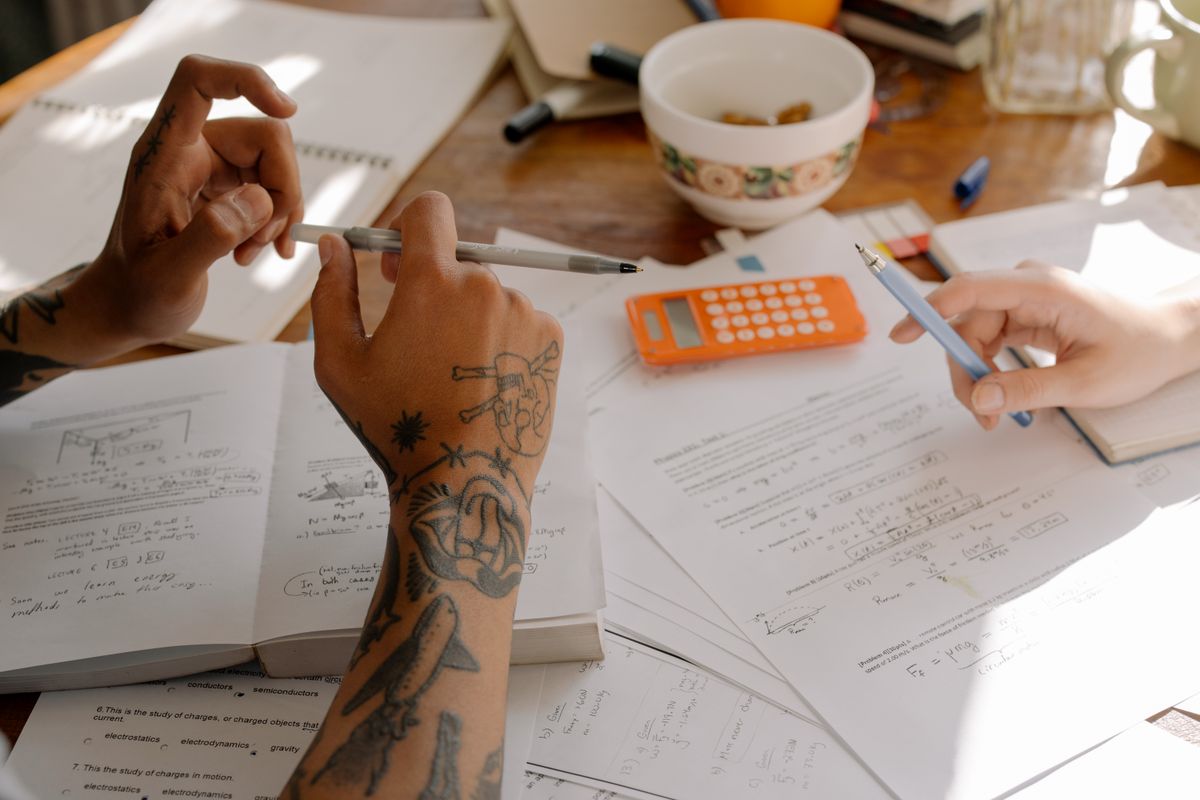
It usually starts with one sentence:
“I will just stay up tonight and finish everything.”
At first, cramming feels like a plan. The exam is tomorrow. There is still too much to cover. You feel behind. You feel guilty. You feel scared. So you decide to force your brain through as much information as possible before morning.
You read faster. You highlight more. You open another video. You jump between chapters. You tell yourself sleep can wait. You drink coffee, tea, energy drinks, or anything that makes your eyes stay open. You keep going because stopping feels dangerous.
But by morning, something strange happens.
You may feel heavy, foggy, irritated, nervous, and slow. The information you pushed into your brain the night before does not always come out clearly. Some answers feel familiar, but not strong enough. You recognise topics, but you struggle to explain them. You remember reading the page, but not the answer. You sit in the exam and realise your brain is not sharp — it is tired.
That is the real danger of cramming.
Cramming feels like emergency preparation, but it often damages the very things you need most in the exam: memory access, calm thinking, attention, timing, accuracy, and confidence.
This does not mean a last-night review is always bad. A controlled final review can help. But panic cramming is different. Panic cramming tries to learn too much, too late, with too little testing and too little sleep.
This guide will show you why cramming hurts exam performance, what to do instead, and how to rescue the night before an exam without destroying your brain for the morning.
Quick Answer
Cramming the night before can damage exam performance because it overloads working memory, creates false confidence, reduces sleep, increases stress, weakens recall, and makes you slower under pressure. The better strategy is not to read everything again. Choose the highest-value topics, test yourself with active recall, fix only the biggest gaps, prepare your exam materials, and stop early enough to protect sleep and focus.
What This Guide Will Help You Do
Understand why more last-minute input can make recall weaker, not stronger.
Learn how sleep, calm, and timing affect what you can actually produce tomorrow.
Replace desperate cramming with focused recall, correction, and final review.
1. Cramming Feels Productive Because Your Brain Sees the Information Again
One reason cramming is so tempting is that it gives a fast feeling of progress.
You open your notes and recognise the headings. You reread a definition and think, “Yes, I remember this.” You watch a video and feel like the explanation is clear. You highlight a paragraph and feel like you captured the important part.
That feeling is comforting.
But comfort is not the same as exam readiness.
Seeing the information again creates familiarity. Familiarity can make you feel prepared because the content looks known while it is in front of you. But the exam does not usually ask, “Have you seen this before?”
The exam asks you to produce, apply, calculate, explain, compare, choose, or write without your notes beside you.
That requires recall.
This is why a student can cram for hours and still blank out. The student built recognition, but the exam demanded retrieval.
2. Cramming Often Builds Recognition Instead of Recall
Recognition is when the answer feels familiar while you are looking at it.
Recall is when you can pull the answer from memory without help.
Cramming often gives students recognition because they are mostly reading, watching, highlighting, or copying. Those methods keep the answer visible. The brain does not have to work hard enough to retrieve it.
Active recall is different. It forces the brain to produce the answer before checking. That struggle is uncomfortable, but it is closer to what the exam requires.
For example, rereading this sentence is recognition:
“Photosynthesis uses light energy to convert carbon dioxide and water into glucose and oxygen.”
But closing the book and answering this is recall:
“What are the inputs and outputs of photosynthesis, and why is light energy needed?”
The second one trains exam memory. The first one may only make the topic feel familiar.
If you need the deeper foundation, read The Complete Guide to Active Recall.
3. The Night-Before Brain Has Limited Space
The night before an exam, your brain is not an empty storage room.
It is already carrying pressure, fear, deadlines, topics, expectations, and tiredness. When you try to force too much new material into that state, your brain can become crowded.
That crowded feeling is what many students describe as:
- “My head feels full.”
- “Everything is mixing up.”
- “I know I read it, but I can’t explain it.”
- “I keep jumping from topic to topic.”
- “The more I study, the less I feel I know.”
This is a warning sign.
When your brain is overloaded, more input may not solve the problem. You may need to reduce, prioritise, and retrieve.
4. Cramming Can Make Similar Topics Mix Together
When you cram, you often rush through many topics close together.
This can cause similar ideas to blur.
For example:
- Two formulas look similar.
- Two historical events have similar causes.
- Two biology processes use similar words.
- Two business terms sound almost the same.
- Two grammar rules feel connected but are used differently.
If you move too quickly, your brain may not separate them properly.
Then in the exam, you remember part of one topic and part of another. You write an answer that feels close, but it is not accurate enough.
This is why final review should include comparison, not just reading.
Night-before rule: If two topics are easy to mix up, compare them side by side instead of rereading them separately.
5. Cramming Often Steals the Sleep That Helps You Think Tomorrow
The night before an exam, many students treat sleep like wasted time.
But the exam is not only a memory test. It is also a focus test, speed test, decision test, reading test, and calm-thinking test.
If you sacrifice too much sleep, you may walk into the exam with information still floating around, but your brain may be too tired to use it well.
That can show up as:
- reading the same question twice
- missing important words
- making careless mistakes
- forgetting simple steps
- struggling to manage time
- feeling emotionally shaky
- choosing the wrong option even when you studied the topic
Sleep is not laziness. Sleep is part of exam performance.
A tired brain may know more than it can show.
6. The Difference Between Final Review and Panic Cramming
Not all night-before studying is bad.
The problem is panic cramming.
| Panic Cramming | Smart Final Review |
|---|---|
| Trying to cover everything. | Choosing high-value topics only. |
| Reading for hours without testing. | Using short active recall checks. |
| Starting brand-new chapters late at night. | Strengthening what is most likely to matter. |
| Ignoring sleep because of fear. | Stopping early enough to protect exam energy. |
| Jumping between topics randomly. | Following a controlled final-night plan. |
The goal is not to do nothing the night before. The goal is to stop damaging tomorrow’s performance with tonight’s panic.
7. Interactive Tool: Are You Cramming or Doing a Smart Final Review?
Use this tool honestly before your next exam night. It will show whether your plan is helping or hurting you.
Interactive Tool: Night-Before Cramming Risk Check
Tick every statement that feels true tonight or usually happens before exams.
8. The Emergency Rule: Do Not Try to Learn Everything Tonight
The night before an exam, “everything” is the enemy.
Trying to learn everything creates panic. It also makes your study session too wide and too shallow. You touch many topics but strengthen very few.
Instead, use the emergency filter:
The Emergency Topic Filter
Choose topics that meet at least one of these conditions:
- It is likely to appear in the exam.
- It carries a lot of marks.
- You understand it partly and can improve it quickly.
- It connects to several other topics.
- You keep making the same mistake with it.
- It is a core formula, definition, process, diagram, or method.
Do not give equal time to everything. The final night is not for equal treatment. It is for smart triage.
9. The 3-2-1 Final Night Rescue Plan
If the exam is tomorrow and you feel behind, use this plan instead of panic cramming.
The 3-2-1 Final Night Rescue Plan
- 3 high-value topics: Choose only three topics that matter most.
- 2 active recall rounds: Test yourself twice on each topic without looking.
- 1 stop time: Set a clear time to stop studying and prepare for sleep.
Here is what it looks like in practice:
- Pick Topic 1. Close your notes and write what you remember.
- Open the notes and correct only the missing points.
- Answer two quick questions on that topic.
- Move to Topic 2 and repeat.
- Move to Topic 3 and repeat.
- Pack your exam items.
- Stop.
This is not perfect preparation. But it is much better than reading randomly until your brain shuts down.
If you need a complete one-day strategy, use this related guide: How to Study One Day Before an Exam and Actually Retain What You Review.
10. What to Do If You Have Not Studied Enough
This is the part many students need to hear honestly.
If you did not study enough before the final night, you cannot fully fix that with one long cram session.
But you can still make better choices.
Do not waste the night punishing yourself. Guilt is not a study method.
Ask:
- What topics can I improve fastest?
- What question types are most likely?
- What formulas or definitions must I know?
- What mistakes can I avoid tomorrow?
- What can I revise without destroying my sleep?
Then work from that list.
You are not trying to become perfectly prepared overnight. You are trying to make the smartest possible improvement without making tomorrow worse.
11. Why Practice Questions Beat More Reading the Night Before
Practice questions are uncomfortable at night because they reveal what you do not know.
But that is exactly why they help.
Reading can hide gaps. Questions expose gaps.
If you have limited time, a few well-chosen questions can tell you more than another hour of passive reading.
Use this simple question plan:
- 2 easy recall questions to warm up
- 2 medium questions to check understanding
- 1 exam-style question to test application
- 1 mistake correction before moving on
Do not do questions only to see a score. Do them to find what to fix.
If remembering what you study is your biggest issue, read How to Remember What You Study for Exams Quickly and Easily.
12. The Parent Guide: What to Say When Your Child Wants to Cram All Night
Parents, this is a delicate moment.
If your child is panicking the night before an exam, shouting “You should have studied earlier” may be true, but it is usually not useful at that moment. It can push the child deeper into panic.
The goal is to help them shift from panic cramming to controlled review.
Try this script:
“You cannot fix everything tonight, but you can still make a smart plan. Choose the three most important topics, test yourself, correct the biggest gaps, pack your exam things, and protect your sleep.”
That gives the child structure without pretending the situation is perfect.
13. What Not to Do the Night Before
Avoid these common mistakes:
- Do not start five new chapters late at night.
- Do not highlight for hours and call it mastery.
- Do not keep replaying videos without pausing to recall.
- Do not drink so much caffeine that your sleep is damaged.
- Do not compare yourself with classmates online.
- Do not study until your eyes are open but your brain is gone.
- Do not leave exam materials unpacked until morning.
These actions may feel urgent, but they often create more stress than progress.
14. The “Stop Studying” Checklist
Many students do not know when to stop.
Use this checklist.
Stop Studying When You Have Done These 7 Things
- You reviewed the top 3 high-value topics.
- You tested yourself without looking at notes.
- You corrected the biggest missing points.
- You compared any topics that are easy to mix up.
- You packed everything needed for the exam.
- You wrote your morning plan.
- You set yourself up to sleep.
Stopping can feel scary, but endless cramming can become self-sabotage.
15. The Morning-Of Exam Plan After a Bad Cramming Night
If you already crammed too much and woke up tired, do not panic again in the morning.
Use a light reset.
- Drink water.
- Eat something steady if you can.
- Do not start a brand-new topic.
- Review only your rescue sheet or mistake list.
- Do 2 or 3 easy recall questions to build confidence.
- Arrive with enough time to settle.
- Read each question carefully before answering.
The morning is not for another panic marathon. It is for calming the brain and protecting focus.
16. The Better Long-Term Fix: Stop Making Every Exam an Emergency
The real cure for cramming is not only a better night-before plan.
The real cure is building a study system earlier.
That does not mean studying all day. It means using small, repeated, active sessions before the pressure becomes extreme.
A better weekly system includes:
- short active recall sessions
- practice questions before you feel ready
- mistake logs
- spaced review
- timed mini-tests
- weekly topic ranking
- one-page summary sheets
That way, the night before becomes a final review, not an emergency rescue.
For a stronger long-term study system, read How to Study Faster and Remember More in Less Time for Exams.
17. Common Questions
Is cramming always bad?
Not always. A short, focused final review can help. The problem is panic cramming: trying to learn too much too late, mostly through passive reading, while sacrificing sleep and calm.
What should I do if the exam is tomorrow and I am not ready?
Choose the highest-value topics, use active recall, do a few practice questions, correct the biggest gaps, pack your exam items, and protect sleep. Do not try to learn everything overnight.
Should I pull an all-nighter before an exam?
For most students, an all-nighter is risky because it can reduce focus, speed, accuracy, and calm thinking. A controlled review with sleep is usually a smarter choice.
What is better than rereading the night before?
Active recall, short practice questions, mistake correction, comparing similar topics, and reviewing a one-page rescue sheet are usually more useful than rereading everything.
How can parents help the night before an exam?
Help the child choose priorities, reduce panic, pack exam materials, and stop at a reasonable time. Avoid turning the night into a blame session.
Final Answer: Cramming Feels Safe, But It Can Damage the Brain You Need Tomorrow
Cramming the night before feels responsible because you are doing something.
But not every kind of studying helps.
Panic cramming can overload your brain, mix up similar topics, create false confidence, reduce sleep, increase stress, and make you slower or less accurate in the exam.
The better answer is controlled final review.
Choose fewer topics. Test yourself. Correct the biggest gaps. Practise a few questions. Compare confusing ideas. Pack your exam materials. Stop at a clear time. Sleep.
The goal is not to know everything by force.
The goal is to walk into the exam with the strongest memory, clearest focus, and calmest brain you can realistically protect.
Related Articles You May Find Helpful
Help Another Student Avoid Panic Cramming
If this article helped you, please share it with 5 or more friends, classmates, parents, teachers, or study partners who tend to cram the night before exams.
A simple share may help another student stop turning every exam into a last-night emergency.
Before you leave, please drop a positive comment below. Tell us what usually causes your cramming: starting late, fear, too many subjects, weak planning, or not knowing what to study first.
.png)

Comments
Post a Comment