Why Your Memory Gets Worse When You Are Being Watched or Tested
Pass Exams Faster • Exam Pressure & Memory
Why Your Memory Gets Worse When You Are Being Watched or Tested
A clear student-and-parent guide to why your brain can remember at home but freeze when the teacher, examiner, parent, or test paper is watching.
Quick Answer
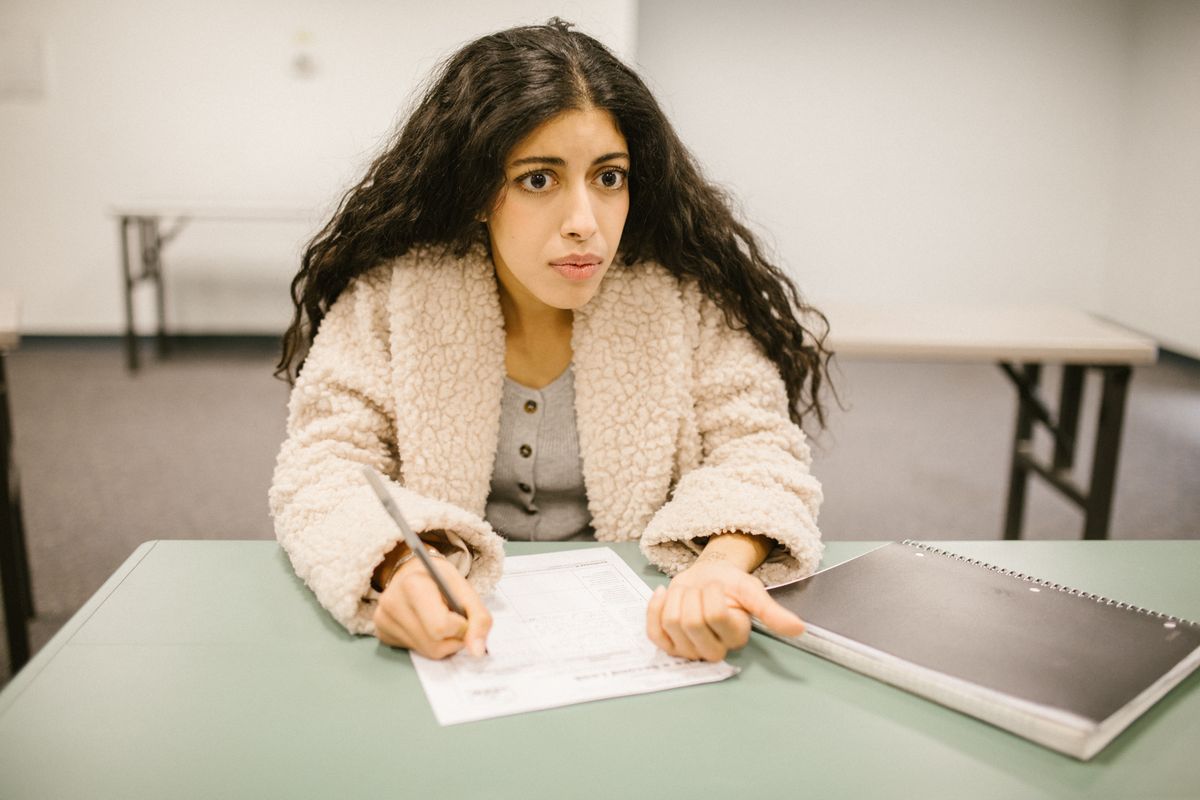
Your memory can get worse when you are being watched or tested because your brain starts treating the situation as a performance threat. Instead of using all its energy to recall the answer, part of your attention goes toward fear of mistakes, embarrassment, time pressure, body tension, and what others may think. This does not mean you are stupid or lazy. It means your memory has not yet been trained to work calmly under observation and exam pressure.
Have you ever known an answer at home, explained it clearly to someone, or remembered it perfectly while studying alone — then suddenly forgot it when the teacher looked at you, your parent asked you to say it out loud, or the exam paper was placed in front of you?
That experience can feel embarrassing. It can make a student think, “Something is wrong with me.” Parents may also misunderstand it and think the child did not study properly. But the truth is more useful than that.
Memory is not only about storage. It is also about access.
You may have the information in your brain, but pressure can make it harder to reach. This is why some students perform well during private revision but lose confidence during oral questioning, timed tests, board exams, interviews, presentations, practical assessments, or even simple homework correction when a parent is standing nearby.
This article explains why that happens and what to do about it. It is written in simple language for students, parents, teachers, and adult learners. The goal is not to create fear. The goal is to show you how to train memory so it becomes stronger under pressure, not weaker.
In This Guide
- Why being watched changes how your brain performs
- Why students forget answers during tests even after studying
- The difference between private memory and performance memory
- How parents can help without making the pressure worse
- A practical training plan to make recall stronger under observation
1. Your Brain Does Not Treat “Being Watched” as Neutral
When someone is watching you answer, your brain may not experience it as a simple learning moment. It may experience it as evaluation.
Evaluation means your brain starts asking silent questions:
- What if I get this wrong?
- What if they think I am not smart?
- What if everyone else knows it?
- What if my parent gets disappointed?
- What if the teacher calls on me again?
- What if I fail this test?
These thoughts may appear quickly, sometimes without words. The body reacts first. The heart beats faster. The hands may feel tense. The mouth may go dry. The eyes move over the page but the meaning does not land. The answer feels close, but not reachable.
This is why a student can say, “I knew it, but I could not remember it when I was asked.”
That statement is often true. The student may not be making excuses. The information may have been there, but the pressure made retrieval harder.
2. Memory Has Two Jobs: Store and Retrieve
Most students think studying is only about putting information into the brain. But exams are mostly about getting information out of the brain.
That second part is called retrieval.
You can read notes and feel familiar with the topic. You can highlight a page and recognize the words. You can listen to the teacher and understand the lesson. But the exam asks you to retrieve information without the full support of your notes, teacher, textbook, or classroom explanation.
Being watched adds another challenge. Now you must retrieve while your brain is also managing pressure.
That is why active recall is so important. Active recall trains the brain to bring information out before the exam asks for it. If you need the full foundation, read The Complete Guide to Active Recall.
3. Private Memory vs. Performance Memory
There is a big difference between remembering something alone and remembering it while being tested.
| Memory Type | What It Feels Like | Risk |
|---|---|---|
| Private Memory | You remember while studying alone, relaxed, and with notes nearby. | It may collapse when time pressure or observation appears. |
| Performance Memory | You can recall, explain, or solve even when someone is watching or the clock is moving. | This must be trained deliberately. |
Many students only train private memory. They study quietly, alone, with notes open, in a comfortable space. Then the test adds silence, pressure, a time limit, a teacher walking around, other students writing quickly, and the fear of marks.
The brain says, “This is different.”
That difference is enough to reduce recall.
4. Why Your Mind Goes Blank When the Teacher Calls on You
Being asked a question in class can trigger the same problem as an exam, but faster.
The teacher asks. Students turn. The room becomes quiet. You feel attention on you. Suddenly, even a simple answer feels distant.
This happens because your attention splits into two streams:
- One stream tries to find the answer.
- The other stream monitors the social danger.
The social danger may not be real danger, but the brain can still react strongly. It may treat embarrassment, judgment, or failure as something to avoid immediately.
When attention splits, memory retrieval becomes weaker. You are not using all your thinking power for the answer anymore. Part of your mind is busy managing fear.
5. Why This Happens More to Some Students Than Others
Some students are naturally calmer under observation. Others become highly self-conscious. That does not mean one student is smarter. It means their nervous system reacts differently to being evaluated.
Students may be more affected if they:
- had a bad experience being laughed at or corrected harshly
- feel pressure to be perfect
- fear disappointing parents
- have failed before and now expect failure
- study hard but use weak recall methods
- compare themselves constantly to classmates
- are tired, hungry, burnt out, or overloaded
For some students, the problem is not the subject. The problem is the pressure attached to the subject.
If burnout is part of the problem, read Study Burnout Is Real — Here’s How to Recognise It Before It Costs You Your Exam.
6. The “Spotlight Effect” Makes Everything Feel Bigger
When students are being watched, they often overestimate how much other people are noticing.
A student may think, “Everyone can see that I am nervous.” But most classmates are thinking about their own test. A child may think, “My parent thinks I am stupid.” But the parent may simply be worried. A student may think, “The teacher is judging me.” But the teacher may only be trying to check understanding.
The brain under pressure often exaggerates the size of the audience.
This is why being watched feels so powerful. It is not only the person watching. It is the story your mind creates about what their watching means.
7. The Real Problem Is Not Pressure — It Is Untrained Pressure
Pressure itself is not always bad. Some pressure can sharpen focus. The problem is pressure that the brain has not practiced handling.
Imagine a student who only studies in perfect silence with unlimited time. Then exam day arrives. The room is quiet but tense. The clock is visible. The teacher is walking. Other students are turning pages. The student suddenly has to perform in a condition they did not train for.
That is like training to swim in shallow water and then being surprised that deep water feels different.
The answer is not to avoid all pressure. The answer is to introduce small, safe amounts of pressure during practice.
8. How to Train Memory to Work While Being Watched
The solution is called gradual exposure.
This means you practice recalling information in slightly more challenging situations, but not so much pressure that you panic and shut down.
Here is a simple ladder:
The Pressure Practice Ladder
- Level 1: Recall alone with notes closed.
- Level 2: Recall alone with a timer.
- Level 3: Explain the answer out loud to yourself.
- Level 4: Explain it to one trusted person.
- Level 5: Answer three questions while someone sits nearby.
- Level 6: Do a short timed quiz with no help.
- Level 7: Practice a mini-test in exam-like conditions.
You do not jump from Level 1 to Level 7 in one day. You build tolerance step by step.
Parents can use this gently with children. Do not suddenly stand over the child and demand answers. Start with calm check-ins. Then move toward short oral recall. Then short written recall. Then timed practice.
9. The 30-Second Calm Reset Before Answering
When you are being watched or tested, your first goal is not to remember everything instantly. Your first goal is to calm the body enough for memory to open.
Use this 30-second reset:
30-Second Calm Reset
- Put both feet flat on the floor.
- Relax your shoulders.
- Take one slow breath in.
- Let the breath out slightly longer than you breathed in.
- Look at the first word of the question.
- Ask: “What is this really asking?”
This small reset gives the brain a signal: “We are not in danger. We are solving a problem.”
It may feel too simple, but simple is exactly what you need under pressure.
10. How to Stop the “Everyone Is Watching Me” Thought
When the mind says, “Everyone is watching me,” answer it with a practical replacement thought.
Use this:
“My job is not to impress anyone. My job is to answer the next question.”
This sentence works because it moves attention from the audience back to the task.
In exams, attention is currency. Every second spent worrying about people watching is attention stolen from the answer.
11. What Parents Should Never Do
Parents often want to help, but the wrong type of help can make memory pressure worse.
Avoid saying:
- “You know this, why are you acting like that?”
- “Stop being nervous.”
- “I just taught you this.”
- “You always forget when it matters.”
- “If you fail this, you will be in trouble.”
- “Your brother/sister never had this problem.”
Those statements increase threat. A threatened brain retrieves worse, not better.
Instead, say:
“Take your time. We are not testing whether you are smart. We are training your brain to answer calmly while someone is nearby.”
That sentence changes the situation from judgment to practice.
If your child shuts down when asked to study, this guide may help: What to Do When Your Child Refuses to Study No Matter What You Try.
12. The “Watched Practice” Method for Students
Here is a simple method to train recall while being watched.
| Step | What to Do | Why It Works |
|---|---|---|
| 1 | Choose one small topic. | Small topics lower fear. |
| 2 | Study for 7–10 minutes. | Short sessions prevent overload. |
| 3 | Close the notes. | This forces recall. |
| 4 | Ask someone to listen quietly. | This adds mild observation pressure. |
| 5 | Explain or write the answer. | This trains performance memory. |
| 6 | Check gently and correct one mistake. | Mistakes become training, not shame. |
Do this for one topic per day. Over time, the brain learns that being watched does not mean danger. It means practice.
13. Why Timed Practice Helps
Many students avoid timed practice because it feels uncomfortable. But that discomfort is exactly why it helps.
If the first time your brain feels exam pressure is in the real exam, the pressure may feel too strong. But if you practice small timed blocks before the exam, the real test feels more familiar.
Start small:
- 5 minutes for three questions
- 10 minutes for one short answer
- 15 minutes for one mini-section
- 25 minutes for a focused practice set
Timed practice trains your brain to answer while the clock exists. It also teaches you to keep moving instead of freezing on one question.
If running out of time is a problem, read How to Manage Exam Time Limits Safely Without Leaving Blank Answers.
14. Why Multiple Choice Questions Can Feel Worse When Watched
Multiple choice questions look simple, but they can create intense pressure. The answer is right there, but two options may look similar. If someone is watching, the student may rush just to escape the discomfort.
That is a mistake.
The student needs a process, not panic. Read the question stem first. Predict the answer before looking at the options. Remove obviously wrong choices. Then compare the remaining options carefully.
For a full strategy, use How to Answer Multiple Choice Questions When You’re Not Sure.
15. What to Do If You Remember After the Test Ends
This is one of the most frustrating signs of pressure-based memory failure.
The exam ends. You walk outside. Suddenly the answer appears.
This does not mean your brain is broken. It usually means the pressure dropped. Once the threat feeling reduced, memory access reopened.
Use that information wisely. Do not only say, “I knew it.” Ask:
- Did I practice under time pressure?
- Did I practice without notes?
- Did I practice with someone nearby?
- Did I review mistakes calmly?
- Did I know how to reset when I froze?
The answer is not to study more randomly. The answer is to train recall under the same kind of pressure that hurt you.
If you often remember at home but forget in exams, this guide is also useful: How to Remember What You Study for Exams Quickly and Easily.
16. The 7-Day Memory-Under-Pressure Training Plan
Use this simple plan before your next test.
7-Day Pressure Recall Plan
- Day 1: Choose three weak topics and do active recall alone.
- Day 2: Repeat the same topics using a timer.
- Day 3: Explain one topic out loud without notes.
- Day 4: Ask someone to listen while you answer two questions.
- Day 5: Do a short timed quiz and review every mistake.
- Day 6: Practice the hardest topic under mild observation.
- Day 7: Do a calm mini-test and use the 30-second reset before starting.
This plan does not require long hours. It requires the right kind of practice.
17. What Students Should Say to Themselves
The words you use inside your head matter. If you say, “I always forget,” you train fear. If you say, “I am stupid,” you increase pressure. If you say, “Everyone is watching me,” you move attention away from the task.
Use this instead:
“My memory is not gone. I just need to slow down, read the question, and retrieve one piece at a time.”
That sentence gives your brain a job. It moves you from fear to action.
18. What Parents Should Say Before a Test
Parents can reduce pressure by focusing on process instead of fear.
Instead of saying, “You better do well,” say:
“Read carefully. Start with what you know. Skip what freezes you and come back. Your job is to stay calm and keep moving.”
This gives the child a strategy. A strategy is better than pressure.
If your child needs help with homework when you do not know the subject, read How to Help Your Child With Homework When You Don’t Know the Subject: The Coach Method.
19. Common Questions
Why do I remember everything at home but forget in the exam?
At home, you may feel safe and have more clues around you. In the exam, pressure, time limits, silence, and fear of mistakes can make memory harder to access. Train with active recall, timed questions, and small pressure practice.
Why do I forget when someone asks me a question?
Being asked directly can make your brain feel evaluated. Your attention splits between finding the answer and worrying about how you look. Practicing out loud with a trusted person can make this easier over time.
Does this mean I have a bad memory?
Not necessarily. It may mean your memory works in calm conditions but needs training under pressure. That is fixable with the right method.
Should parents test children at home?
Yes, but gently. The goal is not to embarrass the child. The goal is to help the child practice recall while someone is nearby. Keep it short, calm, and focused on improvement.
What is the fastest thing to do during a test freeze?
Pause for a few seconds, breathe out slowly, reread the first line of the question, and write one piece of information you do know. Movement often unlocks memory.
Final Answer: Your Memory Is Not Weak — It Is Under Pressure
If your memory gets worse when you are being watched or tested, you are not alone. Many students remember better in private than they do under observation.
The reason is simple: pressure changes the task. You are no longer only remembering. You are remembering while managing fear, time, judgment, and body tension.
But this can improve.
Train active recall. Practice with notes closed. Add a timer. Explain out loud. Ask someone calm to listen. Review mistakes without shame. Use a 30-second reset before answering. Build performance memory step by step.
You do not need a perfect brain. You need a trained brain.
And the good news is this: memory under pressure is not something you are born with or without. It is something you can practice.
Want the Full Study System?
If this article helped you understand why memory fails under pressure, my book goes deeper into the study system students can use to remember more, test themselves properly, avoid passive rereading, and prepare with more confidence.
It is written for students, parents, and adult learners who want a clearer way to study without depending on panic, cramming, or endless highlighting.
Study Motivation Apparel for Students Who Refuse to Quit
Sometimes students need reminders around them that say: stay calm, recall one piece at a time, keep going, and do not let one difficult test define you.
Visit the Pass Exams Faster Store for study-inspired clothing, hoodies, shirts, mugs, and student motivation apparel designed for exam season, late-night revision, active recall practice, and students who are building better habits one day at a time.
Help Another Student Before Their Next Test
If this article helped you, please share it with 5 or more friends, classmates, parents, teachers, or study partners who may know the work at home but freeze when they are being watched or tested.
You can share it on Facebook, WhatsApp, X/Twitter, LinkedIn, Pinterest, email, school groups, parent groups, or student chats.
A simple share may help someone stop calling themselves stupid and start training their memory properly under pressure.
Before you leave, please drop a positive comment below. Tell us whether your memory gets worse in exams, oral questions, presentations, or when someone is watching you study. Your comment may help another student realize they are not alone.
.png)

Comments
Post a Comment